
Biometrics In Sports: How Sensors Track Fatigue And Prevent Injuries
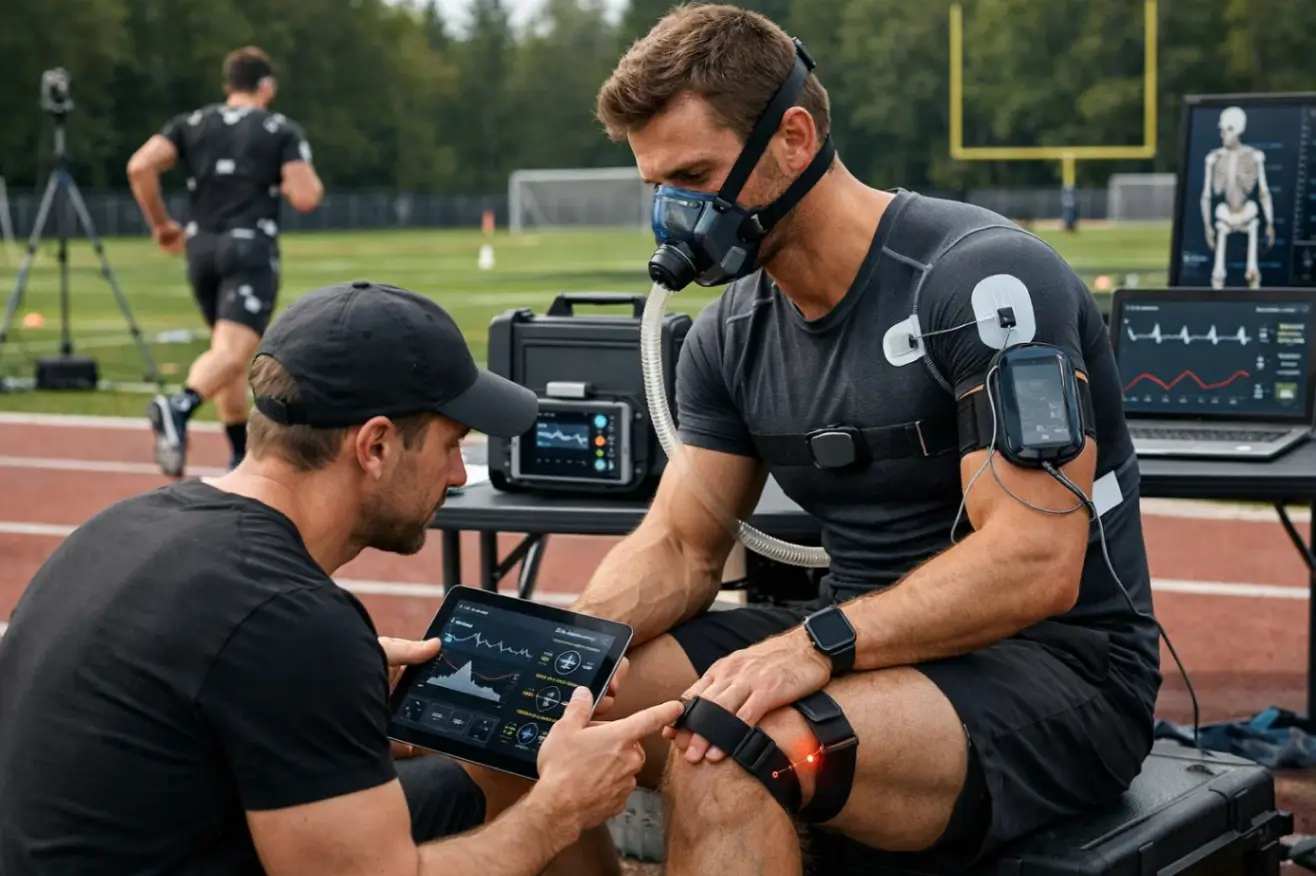
Modern sport has moved far beyond intuition and basic statistics. Today, elite performance is increasingly driven by data gathered directly from the human body. Biometric sensors allow coaches, medical teams, and athletes to understand how the body responds to stress, training, and recovery in real time. This shift has not only improved performance but has also significantly reduced the risk of injuries by detecting early signs of fatigue before they become critical.
The integration of wearable technology into sports has created a new layer of awareness. Athletes are no longer guessing how tired they are or how hard they should train. Instead, decisions are guided by measurable signals such as heart rate variability, muscle activity, hydration levels, and sleep quality. These insights form the foundation of modern sports science and are now used across football, basketball, athletics, cycling, and even amateur fitness.
The Role Of Biometrics In Modern Sports
Biometrics refers to the measurement and analysis of physiological data. In sports, this includes metrics such as heart rate, oxygen consumption, muscle activation, and movement patterns. These indicators reveal how the body is coping with physical demands and whether it is approaching a state of overload.
What makes biometrics especially valuable is its ability to detect subtle changes that are not visible to the naked eye. An athlete may feel fine, but a drop in heart rate variability or an increase in muscle tension can signal underlying fatigue. These early warnings allow training plans to be adjusted before performance declines or injuries occur.
The use of biometric data has also changed how teams approach long-term development. Instead of applying the same training intensity to all athletes, coaches can tailor programs based on individual responses. This personalized approach leads to more efficient progress and reduces unnecessary strain.
Biometric monitoring is now embedded in daily routines, from training sessions to recovery periods. It provides a continuous feedback loop, helping athletes stay within optimal performance zones.
How Sensors Detect Fatigue
Fatigue is one of the main contributors to injuries in sports. It affects coordination, reaction time, and muscle stability. Biometric sensors detect fatigue by tracking multiple physiological markers simultaneously, creating a more complete picture of an athlete’s condition.
One of the most widely used indicators is heart rate variability (HRV). This metric reflects the balance between the sympathetic and parasympathetic nervous systems. A decrease in HRV often indicates stress or insufficient recovery. When monitored consistently, HRV can show whether an athlete is ready for intense training or needs rest.
Another important factor is muscle activity. Sensors such as electromyography (EMG) devices measure how muscles are firing during movement. When fatigue sets in, muscle activation patterns change, often becoming less efficient. This can lead to improper technique and increased injury risk.
Movement tracking also plays a key role. Wearable GPS and inertial sensors analyze speed, acceleration, and changes in direction. A decline in movement quality or asymmetry between limbs can indicate fatigue or early-stage injury.
Several signals work together to identify fatigue:
• Reduced heart rate variability over consecutive days.
• Increased resting heart rate compared to baseline.
• Irregular movement patterns or decreased acceleration.
• Delayed muscle activation or imbalance between muscle groups.
• Poor sleep quality and reduced recovery metrics.
These indicators allow coaches to intervene early, adjusting workloads before fatigue becomes dangerous.
Preventing Injuries Through Data Analysis
Injury prevention is one of the most impactful applications of biometric technology. Instead of reacting to injuries after they occur, teams can now predict and prevent them by analyzing trends in biometric data.
One of the key concepts is load management. Every athlete has a threshold for how much physical stress their body can handle. When training load exceeds this threshold, the risk of injury increases sharply. Biometric sensors help track both external load (distance run, intensity) and internal load (heart rate, muscle stress).
By comparing these two types of data, coaches can identify mismatches. For example, if an athlete shows high internal stress despite moderate external workload, it may indicate fatigue or insufficient recovery. This is a clear signal to reduce intensity.
Another important aspect is asymmetry detection. Small differences between the left and right side of the body can indicate weakness or imbalance. Over time, these imbalances can lead to injuries such as ligament tears or muscle strains. Sensors can detect these differences early, allowing corrective exercises to be implemented.
Data-driven injury prevention also relies on historical analysis. By studying past injuries and the biometric patterns that preceded them, teams can build predictive models. These models help identify risk factors specific to each athlete.
The result is a proactive approach where injuries are no longer seen as unavoidable but as something that can be anticipated and minimized.
Types Of Biometric Sensors Used In Sports
A wide range of sensors is used to monitor athletes, each focusing on different aspects of performance and recovery. These devices are often integrated into wearables such as smartwatches, chest straps, or specialized clothing.
Before looking at specific examples, it helps to understand how different sensors contribute to a complete picture of an athlete’s condition.
| Sensor Type | What It Measures | Example Devices | Use Case |
|---|---|---|---|
| Heart Rate Sensors | Heart rate, HRV | Polar H10, Garmin HRM-Pro | Monitoring cardiovascular stress and recovery |
| GPS Trackers | Speed, distance, acceleration | Catapult Sports GPS, STATSports Apex | Tracking movement and workload |
| EMG Sensors | Muscle activity | Delsys EMG, Myontec Mbody | Detecting muscle fatigue and imbalance |
| Sleep Trackers | Sleep cycles, recovery | WHOOP Strap, Oura Ring | Optimizing recovery and readiness |
| Hydration Sensors | Fluid levels, sweat rate | Nix Hydration Sensor | Preventing dehydration-related fatigue |
| Motion Sensors (IMU) | Movement patterns, joint angles | Zephyr BioHarness, Xsens | Analyzing technique and injury risk |
Each type of sensor provides a piece of the puzzle. When combined, they offer a comprehensive view of how the body is functioning under stress.
This integration is what makes biometric monitoring so powerful. Instead of relying on a single metric, teams can cross-reference multiple data points to make more accurate decisions.
Real-World Applications In Professional Sports
Biometric technology is widely used across professional sports, often behind the scenes. Football clubs, for example, use GPS trackers during training to monitor player workload. If a player shows signs of fatigue, their training intensity is adjusted to prevent injuries such as hamstring strains.
In basketball, wearable sensors track jump load and landing mechanics. Repeated high-impact movements can lead to knee injuries, so monitoring these patterns helps manage risk. Teams analyze how often players jump, how they land, and how their performance changes over time.
Cycling teams rely heavily on biometric data to optimize endurance. Heart rate, power output, and oxygen consumption are tracked continuously. This allows riders to maintain optimal pacing and avoid overexertion during long races.
Even individual athletes benefit from these technologies. Runners use smartwatches to monitor training intensity and recovery. Tennis players track movement and muscle load to maintain peak performance throughout tournaments.
These applications show how biometric data has become an essential tool rather than a luxury. It supports decision-making at every level, from daily training adjustments to long-term planning.
Challenges And Future Of Biometric Monitoring
Despite its advantages, biometric monitoring is not without challenges. One of the main issues is data interpretation. Collecting data is relatively easy, but understanding what it means requires expertise. Misinterpretation can lead to incorrect decisions, such as unnecessary rest or excessive training.
Another challenge is individual variability. Each athlete responds differently to stress, so generic benchmarks are not always useful. This is why personalized data baselines are critical.
Privacy is also a growing concern. Biometric data is highly sensitive, and its use must be carefully managed. Athletes need to trust that their data will be used responsibly and securely.
Looking ahead, biometric technology is expected to become even more advanced. Artificial intelligence will play a larger role in analyzing data and predicting outcomes. Sensors will become smaller, more accurate, and more integrated into everyday equipment.
Future developments may include real-time injury prediction systems and fully automated training adjustments. These innovations will further reduce the gap between potential and performance.
Conclusion
Biometric sensors have transformed the way athletes train, recover, and compete. By providing real-time insights into the body’s condition, they allow for smarter decisions that enhance performance while reducing injury risk. The ability to detect fatigue early is particularly valuable, as it prevents small issues from turning into serious problems.
As technology continues to evolve, biometric monitoring will become even more precise and accessible. What was once reserved for elite athletes is gradually becoming available to a wider audience. This shift is changing not only professional sports but also everyday fitness, making training safer and more effective for everyone.